
General information
Drug use often begins out of interest or addiction. People often do not realize the negative impact that this or that drug has on their life, health, social environment and, in general, their whole life. As a rule, drug use in the first stage is associated with pleasure, entertainment. Most of the time, there is an offer from friends, neighbors, acquaintances who advertise them. Drug dealers may even give away a psychoactive substance for free in the expectation that this person will soon become their potential client.
Many people think that they can easily stop using these substances. However, as time passes, a person needs more doses to experience pleasure. One-time, isolated cases of pleasure or entertainment will gradually grow into a habit, a need, a lifestyle that is no longer under human control. A person loses free will, the ability to make independent choices, and instead of getting rid of the problem, which in itself is illusory, a person faces more problems, be it health, psychological or social problems. However, the main problem is drug addiction.
A drug addict's entire day is spent thinking about and trying to obtain and use a psychoactive substance. It develops both a physical and mental insatiable craving for a psychoactive substance. Life becomes unbearable. Therefore, drug addiction is not only a problem of an individual and his condition taken in isolation. Rather, the complexity of this disease and the difficulty of overcoming it are precisely the scope of its negative impact, which is often reflected in the process of family breakdown, crime, anti-social and unhealthy attitudes and thinking, and social destruction.
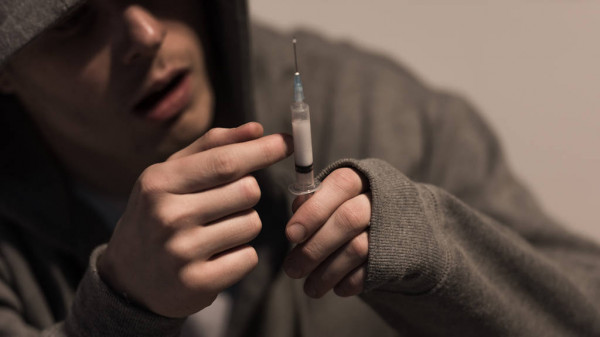
Among the negative consequences of drug use, the danger of spread of contagious infectious diseases as a result of injecting psychoactive substances is significant. For example, as a result of using a needle/syringe used by a person infected with HIV/AIDS, a person becomes infected with the immunodeficiency virus, which leads to the development of the disease - HIV infection, and subsequently, due to the development of various diseases, in the background of strong immune deficiency - death.
Also, infectious diseases developed as a result of injecting drug use are: viral hepatitis B - an infectious disease of the liver, which can turn into a chronic condition; Hepatitis C, which, if developed into a chronic form, can lead to liver cirrhosis and cancer.
Among the negative consequences of drug use, especially dangerous are the cases of death, which can be caused by drug use indirectly, for example, as a result of the aforementioned infectious diseases, or directly - as a result of an overdose. In cases of overdose deaths, the risky actions of users are noteworthy, such as: starting consumption at an early age; poly-drug addiction (simultaneous use of several drugs) and alcohol use; Do the injection alone. However, when done in the circle of other users, in case of acute poisoning, the reaction of those around is often not adequate and timely. Also, it is very dangerous to use after a period of abstinence, when the tolerance of the user's body to the drug is reduced. Also, it should be taken into account that suicide attempts and cases are common among drug users with a history of depression.
When considering the interaction of drug use on the development of the individual and society, due attention should be paid to its adverse effects on the health of pregnant women and fetuses, newborns, including: abortion; newborn mortality; Various anomalies are observed during pregnancy and childbirth; Risk of transmission of infectious diseases from mother to child. In many cases, such children have decreased concentration of attention, aggressive manifestations, behavioral disorders and other health problems at a later stage of development. Also, the negative influence of drug-using parents on their children should be taken into account. At such a time, the parent, switched to obtaining and using drugs, does not pay the necessary attention to the child's physical and spiritual development, does not properly participate in his upbringing, does not give him the right example of life, irresponsibly treats his own status and role in relation to his child. Such children often become victims of abuse by their parents, which, in itself, negatively affects the formation of their psyche and their full integration into society.
Definitions
1. psychoactive substance - any substance of natural or synthetic origin that affects the central nervous system of a person and causes a change in his mental state. From a medical point of view, psychoactivity can be expressed by the special effects of these substances on the central nervous system (CNS) - stimulating, exciting, sedative, sleep-inducing, hallucinogenic, etc. with effects. Thus, psychoactive substances is a collective name that includes a large group of substances that specifically act on the CNS (narcotic drugs, psychotropic substances).
2. Psychotropic substances - Psychoactive substances that affect higher mental processes and are often used in medicine to treat mental illnesses. Initially, the term "psychotropic substances", "psychotropic drugs" existed only from purely professional, ie medical and pharmacological positions - these are medical drugs that have a specific therapeutic or prophylactic effect on mental processes. Since 1971, after the adoption of the new international convention on psychotropic drugs, this term has also acquired a legal tone and, in the context of international control, any substance of natural or synthetic origin that is included in the annexed lists of the UN Convention on Psychotropic Substances of 1971 is considered a psychotropic substance.
3. drug - From a medical point of view, a drug is a psychoactive substance that causes habituation and the formation of dependence, and the systematic consumption of which results in negative medical, psychological and social consequences. According to the definition of the World Health Organization, a drug is "a chemical substance or a mixture of substances that differs from substances necessary for normal human existence (eg, food) and the intake of which causes a change in the functioning and structure of the body."
From a legal point of view, the term "narcotic drug" refers to any substance and plant material of natural or synthetic origin that is included in the annexes of the United Nations Single Convention on Narcotic Drugs of 1961. The term "narcotic drug" is defined by 3 criteria: medical, social and legal. Medical criterion - if a special effect on the CNS determines the use of the substance for non-medical purposes; Social criterion - if such non-medical use is large-scale and socially important; Legal criterion - if such a drug is officially considered a drug and is included in the list of narcotic drugs. Legally, a substance is considered a drug only if these three criteria are met. Any psychoactive substance, after accumulating data on its excessive consumption, can be classified as narcotics or psychotropic drugs. Any substance of natural or synthetic origin that is included in the annexed lists of the 1961 United Nations Single Convention on Narcotic Drugs is considered a narcotic drug.
4. precursor - a substance of natural or synthetic origin, which is not a narcotic drug or psychotropic substance, but can be used in the illegal production of narcotic drugs and psychotropic substances subject to international control.
5. International conventions on drugs - International agreements: United Nations Single Convention on Narcotic Drugs of 1961 (amended in 1972); 1971 UN Convention on Psychotropic Substances; 1988 United Nations Convention on the Suppression of Illicit Traffic in Narcotic Drugs and Psychotropic Substances. These three conventions currently in force form the legal basis for the international control of narcotic drugs and psychotropic substances. Georgia has ratified all three UN conventions.
Role of parents, school and other social factors
The use of psychoactive substances by minors is a particularly acute issue and therefore requires special attention. In most cases, minors start using drugs out of interest and curiosity. As studies show, in cases of drug abuse at an early age, the risk of further development of drug-related problems is much higher. For example, studies show that early cannabis use is a strong predictor of daily use later.
Drug use at an early age is often indicative of a problematic family and social environment. At this time, the minor is not able to adapt to the difficult psychological or social situation created around him (be it in the family, school, peers, etc.), to deal with the difficulties before him and to respond adequately to them. Often this is a complex situation where several problems come together.
Among the problematic risk factors, the following should be considered:
a) Family: Children whose parents or other family members use drugs belong to the vulnerable group with the highest risk of drug use at an early age. This is related to the psychological and social problems in the family, or the neurobiological consequences of the child's development as a result of drug use by the parent during pregnancy. Excessive consumption of alcohol in the family, domestic violence, criminal actions of family members are also connected with the use of drugs by children. Also, the risk group includes families with low education level, inadequate employment and working conditions, when the parent cannot set an appropriate example for the child and cannot ensure his protection, proper care for his development.
b) School: studies have shown a correlation between the danger of drug use and cases of dropping out of school at an early age, absenteeism, improper involvement in the educational process, and expulsion from school.
Homeless and street children are classified as risk groups in terms of drug use at an early age; children from socially and culturally excluded groups; Children prone to delinquency and anti-social behavior. The analysis of the mentioned social factors allows to fully perceive and investigate the scale of the problem, in order to plan the response mechanisms correctly.
It is significant that children with drug abuse problems have attention deficit and hyperactivity syndrome, behavioral and psychological disorders. There is a connection between the use of drugs, especially cannabis, and early forms of schizophrenia and other psychological disorders, which further demonstrates the severity of the problem and the need for timely response mechanisms.
Against the background of all the above, social factors are of great importance to overcome the problem of drug use, especially in relation to minors. Family and school factors are particularly critical in early drug use. A complex approach/intervention is necessary when combining health, education and social services; Also, a component of the justice system can be involved in this process. The aim of the above-mentioned activities is, in general, to identify the problem, including vulnerable groups, at an early stage and provide appropriate intervention, before the situation becomes unmanageable and develops into regular use and leads to other drug-related problems (infectious diseases, overdose, etc.).
Source: https://police.ge/ge/projects/narkotikebi/informatsia-narkotikebze/zogadi-informatsia
The opinions expressed in the article are those of the author and may not reflect the official position of LAWHUB.




discussion 0
to write a comment Sign in to your account. Anyone can read comments.
There are no comments yet - start a discussion.