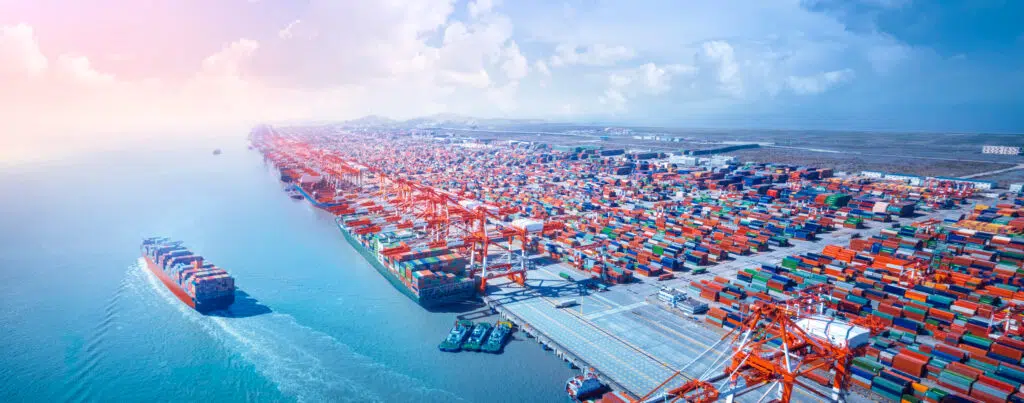
The article refers to one of the types of civil-legal relationship, shipping-transportation, its specificity and legal regulation. The legal relations of shipping and transportation are regulated by the twelfth chapter of the Civil Code of Georgia. The mentioned chapter regulates such necessary issues specific to the processes of cargo transportation and passenger transportation, such as: features of cargo transportation and passenger transportation; contract forms; terms and conditions; Issues of responsibility of the parties; The amount and terms of compensation for damages and other important issues arising in these relationships.
Even in the early stages of human development, public relations required: bringing people together in time and space, for efficient management of production processes; Use of material and cultural values for scientific, public-political, military, educational and other activities. This is how settlements arose, a contradiction was created between territorial expansion and the need to quickly move people from places of residence to places of temporary stay. Overcoming this obstacle was provided by city passenger transport.
There are several independent types of transport, their division is due to the fact that the means of transport used to transport cargo and transport passengers are different. The transport system includes: railway the river marine Motor and air transport. Each of the above-mentioned means of transport is characterized by certain specifics and is regulated by relevant legislation.
As it is known, movement is considered as a product of transport. Transport is a necessary condition for the production of any product. Transportation is the fourth major stage of material production next to mining, processing and manufacturing. The peculiarity of transport products is that it is not produced in material form, what is sold by transport production is movement. The beneficial effect obtained from it is continuously related to the transportation and, moreover, to the transportation production process.
Passenger transport is one of the main types of transport services for the population. It provides transportation of people, transportation of their luggage and hand luggage. Passenger transports are of special importance, both for the reconstruction of the country and for the purpose of fully and qualitatively meeting the increased requirements of safe and fast movement of the population in daily public life, strengthening the connection between settlements, increasing movement and circulation between separate settlements. Reducing the cost of travel time of the population directly affects the productivity of their labor, and the time saved allows each of them to direct it in favor of their interests.
In terms of technological processes, passenger car transportation is not a complicated process compared to other types of transportation. It is much more accessible and practical. The special flexibility of the rolling stock of road passenger transport is very important, which ensures, if necessary, a quick change of the direction of traffic and the possibility of direct approach to the points of departure and destination, and what's more, only road passenger transport allows the passenger to move from door to door.
The shipping-carrying relationship begins with the signing of an agreement of appropriate content between the parties, in which a number of conditions and issues must be clearly spelled out, which are a solid guarantee of the protection of the legal interests of the parties. The parties to the contract of carriage of a passenger are the carrier and the passenger to be transported by the carrier to the destination.
During the shipping contract, there is a mutual contractual obligation, because certain rights and duties are assigned to both the shipper and the carrier. Liability for breach of carrier's obligations is characterized by certain specifics.
In the event that the shipment is carried out under one contract by different carriers following each other, each of them is responsible for carrying out the entire shipment, the second and every subsequent carrier becomes a party to the contract through the transfer of cargo and bill of lading. When the loss or damage to the cargo is caused by two or more carriers, then each must pay an amount corresponding to his share of liability, if one of the carriers is insolvent, the amount due but not yet paid by him is divided among the other carriers in proportion to their share of the shipping compensation received.
The legislator prohibits such an agreement that does not comply with the rules of the chapter of the Civil Code that regulates shipping relations.
As I mentioned, there are many types of transportation, one of which is air transportation. From a strategic point of view, international air transportation-shipping, due to its potential benefits, is a priority for the state, global and regional directions are allocated to solve common problems for its prospective development.
Perfection of foreign economic ties is the greatest reserve for increasing the economic efficiency of every country. The development of international economic ties is directly related to the development of international air traffic. The international organization ICAO examines all the problems in civil aviation and tries to solve them through international agreement and negotiation. ICAO unites more than 180 sovereign states. International air traffic should be based on equality of opportunity, be performed rationally and economically. In fact, the main objective of ICAO is to develop safe regular, efficient and economical air transport.
State regulation in the field of air transport includes regulation of the activities of its country, foreign persons and organizations on the territory of its state and the airspace above it, while exercising its sovereignty.
Increasing the volume of air transportation contributes to the development of local trade and tourism, which in itself is one of the factors of the advancement and strengthening of the country's economy. A carriage right is a market access right expressed in the form of an agreed geographic or technical description, or combination of such descriptions, relating to who or what is to be carried or transported by authorized aircraft on a designated route or part thereof.
As for the Maritime Code of Georgia, according to which, during sea transportation, a contract is concluded, which is formed in writing. According to the mentioned contract, the carrier or the charterer fulfills the obligation to transport the cargo and hand it over to the consignee. During sea transportation, a sea waybill, a bill of lading is drawn up, where the terms of the agreement on sea transportation of cargo are written.
The Maritime Code of Georgia provides for cases when both parties to the contract have the right to withdraw from the contract, without compensating the other party for the corresponding costs. Georgia has the special authority to build (also allow to build) and regulate the creation, operation and use of: artificial islands in its special economic zone; devices and facilities, which are used for the purpose defined by Article 32 of the Law of Georgia on Maritime Space, as well as for other economic purposes; Georgia has special jurisdiction over these artificial islands, including customs, immigration, fiscal and sanitary laws and regulations, as well as security. Georgia has the right to create reasonable security zones around the artificial islands, structures and equipment in its special economic zone, if necessary, within which it is authorized to take necessary measures to ensure the safety of navigation, as well as artificial islands, structures and equipment.
According to the Railway Code of Georgia, cargo transportation is carried out on the basis of the transportation contract. In the event that the shipping conditions are not provided in accordance with the legislation, such conditions shall be considered by the parties in the contract signed by them. under the contract of carriage of the passenger. The railway undertakes to provide the passenger with a seat, to transport him from one place to another and also to transport the luggage belonging to the passenger. During railway transportation, a bill of lading is created, on the basis of which the railway fulfills the obligation to transport the cargo transferred to it by the shipper and deliver it to the consignee in compliance with the conditions of transportation, and the shipper is obliged to pay the fee established for the transportation of the cargo and other services.
Criminal liability may arise during transportation. The criminal object of traffic crimes is the public relations related to traffic safety and operation rules, as well as human life or health. Objectively, the majority of crimes are committed by active action. Some of them can be committed either by action or by inaction. In most cases, the subject of traffic crimes is a special, private worker who is involved in the process of transport management and operation in various ways, or directly drives a vehicle. Criminal liability for traffic offenses is established from the age of 14. Article 275 of the Criminal Code deals with the violation of the traffic safety or operation rules of railway, water, air or ropeway transport.
The public environment determines the necessity of people's movement in space as a function of their social behavior, it provides an incentive for a person to progressively expand the areas accessible to him and increase the speed of movement. The purpose of passenger transport is to satisfy the population's need for movement as much as possible and thereby contribute to strengthening the connection between settlements, increasing the circulation of the population in a separate settlement and raising their standard of living.
The transfer of people can be carried out both on a professional level and independently, by citizens with personal goals. Translations performed at a professional level can be commercial or non-commercial. Commercial transfers are performed by the transferor in order to obtain economic results. It is divided into transport for general use and technological transport. Non-commercial transfers are performed by citizens to meet their personal needs, as well as by organizations based on the interests of the state or municipal service.
One of the important issues for the country is international transportation, which is defined by the Law of Georgia "On Road Transport" as follows: "International transportation is passenger transportation (boarding and disembarking) or cargo transportation (loading and unloading), including transit, through one or several countries, carried out between two points located in different countries." International transportation has relevant taxation rules, which are regulated by the Tax Code of Georgia.
Bibliography:
1) Civil Code of Georgia. Tbilisi. 1997;
2) Criminal Law Code of Georgia;
3) Air Code of Georgia. Tbilisi 1996;
4) Maritime Code of Georgia. Tbilisi, 1997;
5) Railway Code of Georgia. Tbilisi 2002;
6) Tax Code of Georgia. Tbilisi 2012;
7) Law of Georgia "On Road Transport". Tbilisi 1995;
8) N. Pepanashvili. Business Law. 2011;
9) D. Geferidze. Aspects of international legal regulation of international air transportation. Tbilisi. 2009;
10) Z. Kandelaki. International transportation - shipping technology and management. Tbilisi. 2009;
11) F.A. Zokovich. Materials for cargo operation issues. Tbilisi. 1988;
12) Nugzar Navadze, Vasil Kartvelishvili, Teimuraz Gorshkov. Passenger motor vehicles. Tbilisi. 2009;
13) J. Kakhiani. State and economic regulation of civil aviation in Georgia. Tbilisi. 1999;
14) Международные договора и соглашения в области внешнеторговых грузов, Воздушные перевозки http://www.lexim.ru/smi/1065
15) Бордунов В.Д. Международное воздушное право, М.,2007;
16) Almanac No. 5. Levan Bardavelidze shipping and handling. 1998;
17) Shorena Gabichvadze. Justice. The concept and forms of the air transportation-carriage contract. 2009;
18) Decisions of the Supreme Court
The opinions expressed in the article are those of the author and may not reflect the official position of LAWHUB.





discussion 0
to write a comment Sign in to your account. Anyone can read comments.
There are no comments yet - start a discussion.