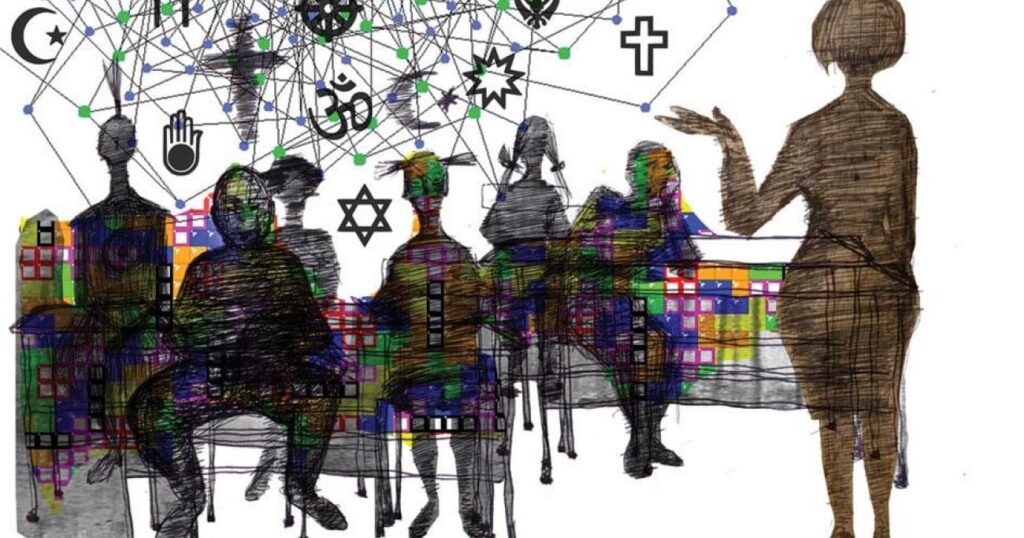
After the Second World War, humanity finally understood the importance of equality and decided to universally recognize this principle. "Universal Declaration of Human Rights" adopted by the UN General Assembly on December 10, 1948 The very first article states: "All men are born free and equal in dignity and rights. They are endowed with a conscience and must treat one another in a spirit of brotherhood."
Equality is a necessary element of a modern democratic state. It is a prerequisite for human well-being, because economic and political development is impossible without it. If each person does not have an equal opportunity to participate in the country's economic processes, develop his creativity, hold a government position, etc., the society will lose a lot of resources and opportunities and will be in a constant state of struggle.
It should be noted that the idea of equality in Georgia is not a new concept. It is our historical choice, which is indicated by the thoughts of Georgian public figures of the 19th century. Ilia Chavchavadze wrote: "Everyone knows that persecution and national hatred in the present time, intolerance of each other, intolerance of each other because you are of a different seed and I am of a different seed and we cannot live together, is only the doctrine of a fool and a fool and is justly reprimanded by every honest and open-minded man." Jacob Gogebashvili also spoke about the principle of equality: "The principle of equality strengthens the humane relationship between elements of different tribes, breeds mutual trust and love, establishes fruitful mutual influence between local and non-local elements, and promotes united struggle for the achievement of the goal...Repressive measures dictated by narrow racial particularism can only give us harmful results."
The concept of equality is directly related to the prohibition of discrimination. Discrimination is the unequal and unfair treatment of people on the basis of some characteristic that has no objective and reasonable justification. Not all differentiation (different treatment) will be considered discrimination, for example, the refusal of the state to issue driver's licenses to blind persons will not be considered a violation of the right to equality, because in this case the state has a legitimate objective.
The record of Article 11 of the Constitution of Georgia, which at first glance exhaustively lists the signs of discrimination, however, according to the practice established by the Constitutional Court, the content of Article 11 of the Constitution of Georgia is open and includes all signs of discrimination.
There is direct and indirect discrimination. direct discrimination It is the treatment or the creation of conditions that puts a person in a disadvantageous position when enjoying the established rights or because of any characteristic compared to another person in similar conditions. For example, it is direct discrimination when only men are allowed to enter any state institution and not women, because of gender or if only Georgian citizens have the right to buy land in Georgia and not citizens of other countries or stateless persons. Direct discrimination is also when they create unequal conditions for you or treat you unequally because of your belonging to some sign or group, for example, you are not allowed to pray because of your religion, you are not allowed in a restaurant because of your skin color, a doctor refuses to serve you because of your sexual orientation, your contract at work is no longer renewed because you are pregnant, you use a wheelchair and cannot enter the building, etc.
Indirect discrimination It is a situation where a provision, criterion or practice that is neutral in form and discriminatory in substance puts a person in a disadvantageous position due to some characteristic compared to persons in a substantially unequal position. For example, it is indirect discrimination when people who wear a dress are not allowed to enter a public institution. In this case, we will not have direct discrimination based on gender, but indirect discrimination due to gender, because in Georgian society only women wear dresses, therefore this rule will affect only women. Another example of indirect discrimination is banning the right to wear a headscarf in an institution, such as a public school. Although this rule appears to be neutral and applies equally to all persons, it only affects (and puts them at a disadvantage) those persons who want to wear headscarves due to their religious beliefs (for example, Muslims). Therefore, it is indirect discrimination on religious grounds.
It is important to distinguish equality from equalization, the latter itself contradicts the idea of equality, since equality means equal provision of opportunities that will allow people to self-realize in this or that field. According to the idea of equality, the state should not treat people who are essentially unequal. Violation of the mentioned also constitutes indirect discrimination. For example, if the self-governing body announces a competition for the paving of sidewalks in the city and does not take into account the so-called Placing ramps for people with disabilities will violate equality, because the road paved by the project will seem to be for everyone, but people with disabilities will not be able to use it. In this case, disabled people and people who can move are not equal persons because of their different abilities, that is why the state should take into account their different needs and treat them differently. It is also important to realize that no single sign of difference, be it race, skin color, political opinion, gender, or anything else, has any superiority over others. Any discrimination, regardless of the grounds on which it is based, is equally prohibited.
Any one of us can become a victim of unequal treatment at any time, for any reason, so it is important to know how to recognize to what extent a specific action is discriminatory, since equality and the prohibition of discrimination are the basis of democratic governance in the state. And sharing democratic values and the principle of equality is a prerequisite for peaceful coexistence of the society.
Source: http://equalitycoalition.ge/article/42
(Coalition for Equality)
The opinions expressed in the article are those of the author and may not reflect the official position of LAWHUB.
Updated: 30 September 2024





discussion 0
to write a comment Sign in to your account. Anyone can read comments.
There are no comments yet - start a discussion.