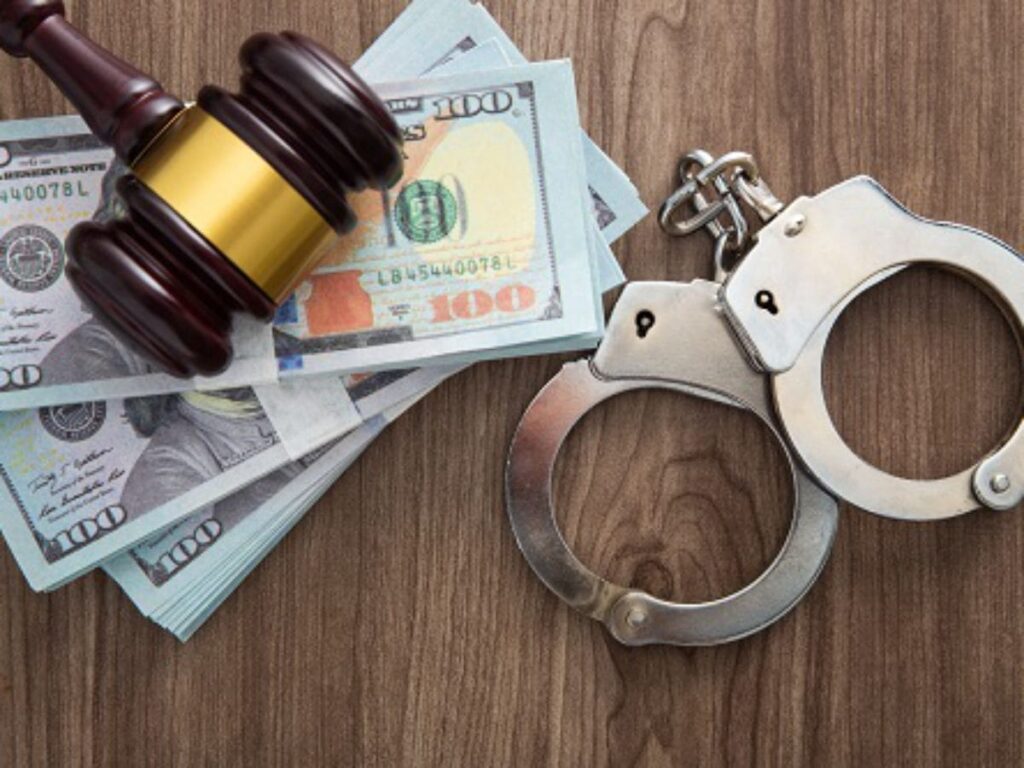
Money laundering is the legalization of illegal income so that the owner can use it openly and openly. This type of money laundering happens all over the world every day. Billions of dollars are laundered every year through various financial institutions. A continuous flow of cash flows across the world every second in both real and virtual space. Where and when did the term "money laundering" appear? How does the mechanism of this financial machination work? What are the methods of money laundering and who launders money?
When and why did the term "money laundering" appear?
There is a legend according to which the term "money laundering" appeared in the USA during Prohibition. At that time, the Chicago mafia made very high profits from the illegal trade in spirits and other sources. According to the report, it was then that a scheme was developed, according to which this amount was officially recorded as the income of the laundry chain. Back then, laundry services were paid in cash, so it was impossible to know how many people actually used this service. This is what allowed the gangsters to turn the criminal money into the legal profit of the laundries. Thanks to this association, illegal money was called "washed", "laundered" (money laundering). However, this is more of a myth than a fact.
The mafia's interest in money laundering arose after 1931 Al Capone He was caught for non-payment of income tax.
Law enforcement authorities were able to prove that his real and official income did not match. The second big mafioso thought about this Meyer Lensky He came up with a scheme to launder illegally obtained money.
Initially, money was laundered through casinos. Later, the same Lensky came up with a scheme that would work through the banking system. He opened anonymous accounts in Swiss banks where he deposited large sums of money. Then he received loans from the same banks and named them as the source of his money. It was in this way that dirty money became clean and legal through the bank.
Anyway, for the first time the term "money laundering" was recorded in the press in 1973 in an article in the British publication The Guardian, which the Watergate scandal It was about In legal practice, this term was used for the first time in 1982. As part of this case, it was established that Sonal, an American company owned by several Colombians, was transferring the proceeds from the sale of drugs to its own account at Capital Bank (Miami, USA) and was laundering money in this way.
After September 11, 2001, the US law enforcement agencies pay particular attention to the money with which charitable, religious and non-governmental organizations manage to finance terrorism through an underground quasi-banking system (for example, Hawala).
What are the methods of money laundering?
One method of money laundering is the Colombian black market, where money from the drug trade is exchanged for Colombian pesos. This state currency is then used to buy various expensive goods, which are eventually sold in dollars. This is one of the most popular methods of money laundering in the Western Hemisphere.
Another way to launder money is to break up a large amount of money into smaller parts and place it in different deposits in different banks at certain intervals of time. For example, in the case of a one-time deposit of more than 10,000 dollars to an account in the USA, the bank is obliged to inform the federal government about this operation.
The third method of money laundering is the shadow (underground) banking system. At this time, the illegal income is transferred to an offshore account in the country where the bank secrecy law applies. In other words, in such states it is allowed to open a bank account anonymously. Banks of Cayman Islands and Bahamas, Panama, Bahrain, Singapore and Hong Kong are mainly used for this purpose. In Asia, there are banks that have a legal alternative system that allows the client to carry out any transaction without any documentation, leaving no chance for investigation.
Another way of money laundering is when a deposit is opened in the name of a fake company, then this money is invested in a legitimate business with fake invoices and accounting balances. Such companies are created by criminals to launder money. However, it may also be a legitimate business in which "investments" are made. For example, a brokerage firm, a casino, a bar or a strip club. Such institutions are usually associated with a large flow of money, which is a good means of laundering illegal money.
What is the process of money laundering?
The first step is to place the dirty money as a bank deposit in a legitimate financial institution. After that, through electronic transactions, money is transferred to different accounts or transferred to another currency, with which they then buy expensive things to change the monetary form. In the final stage, the laundered money begins to circulate through a legitimate bank transfer to the account of the company used to launder the money or with the luxury items purchased in the second stage.
Who launders money?
Money is laundered by drug dealers, fraudsters, corrupt politicians, officials, bandits, terrorists, etc.
Why do they launder money?
The money has to be "clean" because the criminals don't want to leave a trace. Members of the mafia and terrorist groups do not spare money for this financial machination. They know very well that if the criminal activity is fully exposed, the punishment will be much harsher than it would be for money laundering alone.
What are the examples of money laundering?
In the late 1980s, the famous economist Franklin Jurado laundered money for Colombian drug lord Jose-Santa Cruz London. He deposited the money he received from the sale of drugs in the USA into a bank account in Panama. After that, the money was deposited in more than 100 European banks. The amount of each financial operation did not exceed 10,000 dollars. Already from here money was transferred to Colombia, where Jose-Santacruz Londono could finance his drug business with this amount. Before he was caught and sentenced to seven and a half years, Jurado managed to launder more than $36,000,000.
Money laundering is often masked by the love of art, because the buyer of this or that expensive painting has the right to remain anonymous. In 1982, Brazilian banker Edemar Cid Ferreira showed up at John F. Kennedy Airport in New York with a painting worth $100. Law enforcement authorities soon found out that it was a masterpiece worth 8 million dollars, which belonged to an American artist. Thanks to a criminal scheme disguised as an interest in art, Edemar laundered more than 50 million dollars and created a collection of 12 thousand paintings. In 2006, Ferreira was sentenced to 21 years for fraud, tax evasion and money laundering.
The New York Times conducted a journalistic investigation in 2015, which revealed that the main part of the elite real estate in the USA is owned by companies created by name, which do not disclose the identity of the buyer. The seller is not interested in the origin of the money, because the law does not require it. As a result of a journalistic investigation, 37% of elite apartments in the multifunctional complex Time Warner Center (New York) belong to foreigners. Among them are citizens of Russia, China, Colombia and Mexico.
Can money laundering be controlled?
Controlling money laundering is very difficult, as any country's financial institutions are used for this purpose. Experts consider this a serious problem and believe that to overcome it, the efforts of the whole world are necessary. However, the fight against money laundering has a serious barrier, which is created by the banking secrecy rules in some countries. That is why it is almost impossible to control money taken abroad.
Source: see here.
The opinions expressed in the article are those of the author and may not reflect the official position of LAWHUB.


discussion 0
to write a comment Sign in to your account. Anyone can read comments.
There are no comments yet - start a discussion.