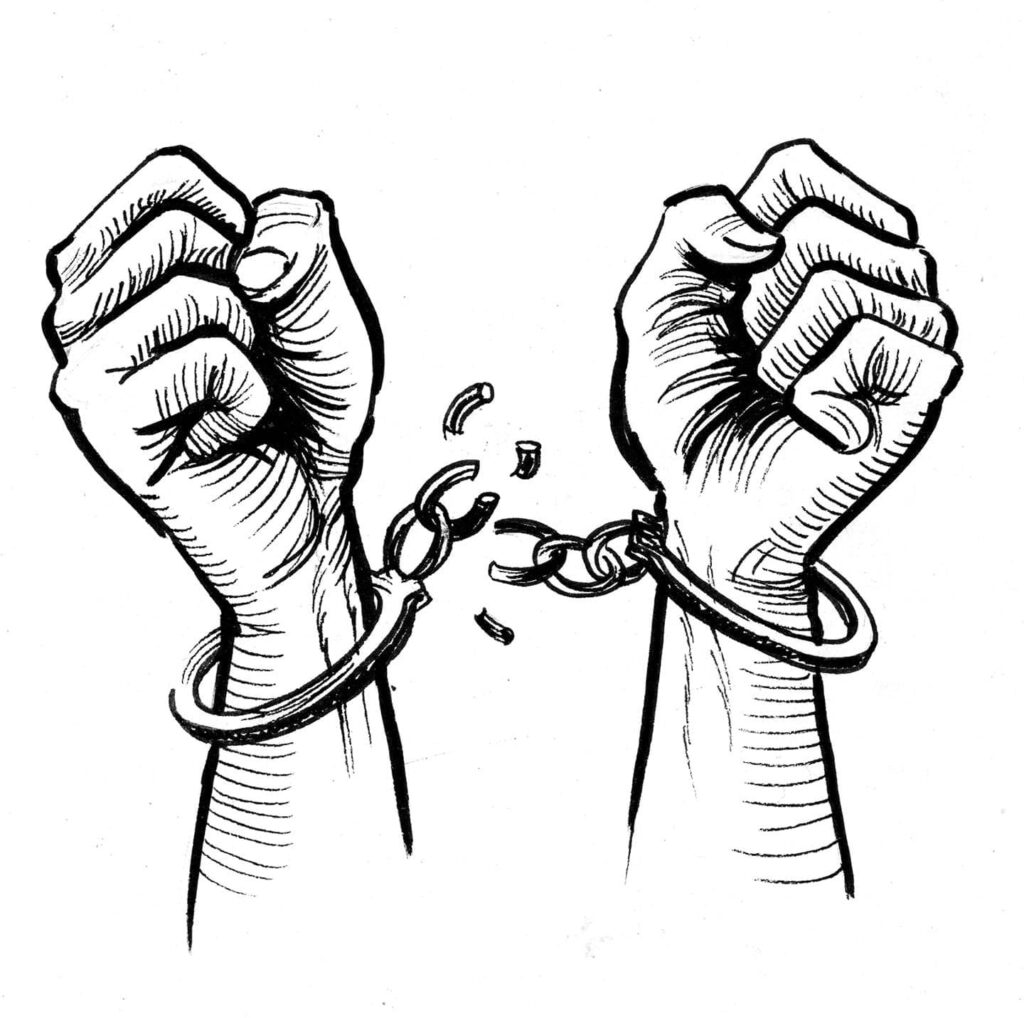
Amnesty (Greek: amnestia — forgetfulness, forgiveness) is an act of the state authority, which completely or partially releases the criminal from responsibility, a mixed form of release. Through amnesty, at any stage of the criminal justice process, it is possible to release the convicted person from both criminal liability and punishment, or to reduce the sentence imposed on him or to change it to a lighter one. Under the amnesty act, the convicted person can also have his conviction removed. Amnesty may be general or private. A private amnesty is the same as a pardon. General amnesty does not apply to a specific person, but to certain categories of criminals in general. The amnesty applies to acts committed before its issuance. In Georgia, the Parliament of Georgia declares amnesty for unspecified persons individually, or the President of Georgia declares amnesty for specified persons (pardon). Amnesty can be general (full) or partial.
Amnesty is a legal process whereby individuals or groups are granted clemency or limited liability for criminal offenses by the state. As a result of an amnesty, a person may have their sentence revoked, reduced, or prosecuted altogether. Amnesty usually refers to crimes committed in a political or public context and is carried out by the head of state, parliament or other relevant body. The purpose of this is to promote reconciliation, stability or the improvement of the legal system.
The history of amnesty has been growing and evolving for millennia. Its roots come from ancient civilizations, where kings and rulers had the power to pardon, which helped to defuse conflicts and maintain public order. Amnesty has often been used as a political tool, especially after war and to resolve social conflicts. The first case of amnesty is mentioned in ancient Greece, around 403 BC, when, following a political revolt in Athens, the population was granted amnesty. It was one of the first times when an entire community was freed from politically motivated crimes. in the Roman Empire Amnesty was used as a tool for social reconciliation. Emperors often issued amnesties on their birthdays to reconcile some of the public. in the middle ages Amnesty was often announced by kings. This process was especially important in the case of politically motivated crimes, in order to pardon rebellions and create a unified, stable state. in the 18-19 centuries Amnesty spread even more widely, especially in Europe. After the French Revolution, the amnesty process became an important tool for public reconciliation. Similar trends were observed even after the American Revolution. Amnesty became especially popular after World War II, when many countries used it to reconcile opposing sides. The United Nations and international organizations actively began to spread the idea of amnesty, especially to solve issues related to human rights violations. Throughout history, amnesty has been used as a political and legal tool to promote social stability and peace.
The main purpose of amnesty is:
1) Social reconciliation: Amnesty is often used after internal conflicts to promote societal reconciliation. This is especially relevant after civil wars, political crises or revolutions, when the state tries to restore unity and stability.
2) Resolving political conflicts: Amnesty is used to overcome opposition from political or military opponents who are often difficult to prosecute through conventional legal mechanisms. Through it, it is possible to end the conflict or speed up the negotiation process.
3) protection of human rights: Amnesty can be used as a legal mechanism to protect the rights of certain people, for example to release political prisoners or in situations where crimes are committed in a political or military context.
4) ensuring public stability: Amnesty is often used in situations where punishment or prosecution will only exacerbate the conflict. In this case, amnesty helps to reduce conflicts and establish peace.
The meaning of amnesty:
1) Protection of the principles of justice and humanism: Amnesty recognizes the humanitarian need that in certain cases criminal prosecution should not be a priority and that social interests such as peace and harmony may be better protected.
2) Political transition and peace building: In countries where there have been wars, revolutions or civil strife, amnesty is often used to establish peace and start new, democratic processes. This may include pardoning representatives of the old regimes to avoid further conflicts.
3) Release of political prisoners: Amnesty is particularly important in the context of the release of political prisoners, which is often requested by international organizations. This is seen as an effective way to protect human rights. Amnesty, when used correctly, becomes an important tool that allows the state to peacefully and humanely resolve acute political or social crises.
The Parliament of Georgia adopted the draft law "On Amnesty". This "amnesty bill" is a balanced project, which is a practical manifestation of the principle of humanism and at the same time, it takes into account the interest of protecting public safety, as much as possible insures the risks of the deterioration of the criminogenic situation and the recurrence of crime. "After the adoption of the amnesty law, more than 1,000 prisoners will leave the penitentiary. In total, in the form of various benefits, the amnesty will affect more than 5,000 prisoners. The amnesty project will affect 22,000 probationers, of which 7,000 people will leave the probation system immediately after the law is adopted. In the end, full or partial release from punishment will affect the criminal justice system. Crimes under Article 300 of the Code.
The opinions expressed in the article are those of the author and may not reflect the official position of LAWHUB.




discussion 0
to write a comment Sign in to your account. Anyone can read comments.
There are no comments yet - start a discussion.